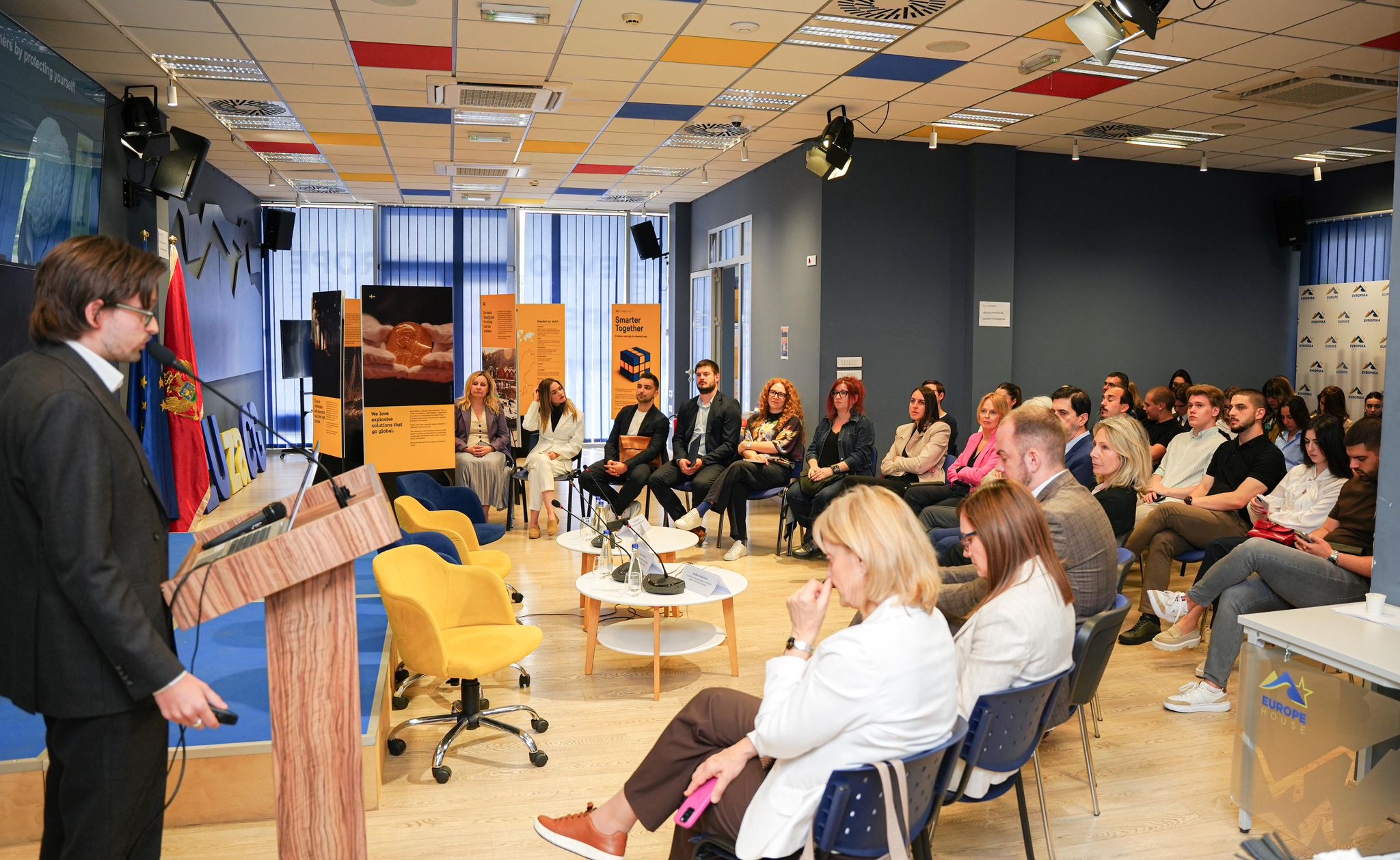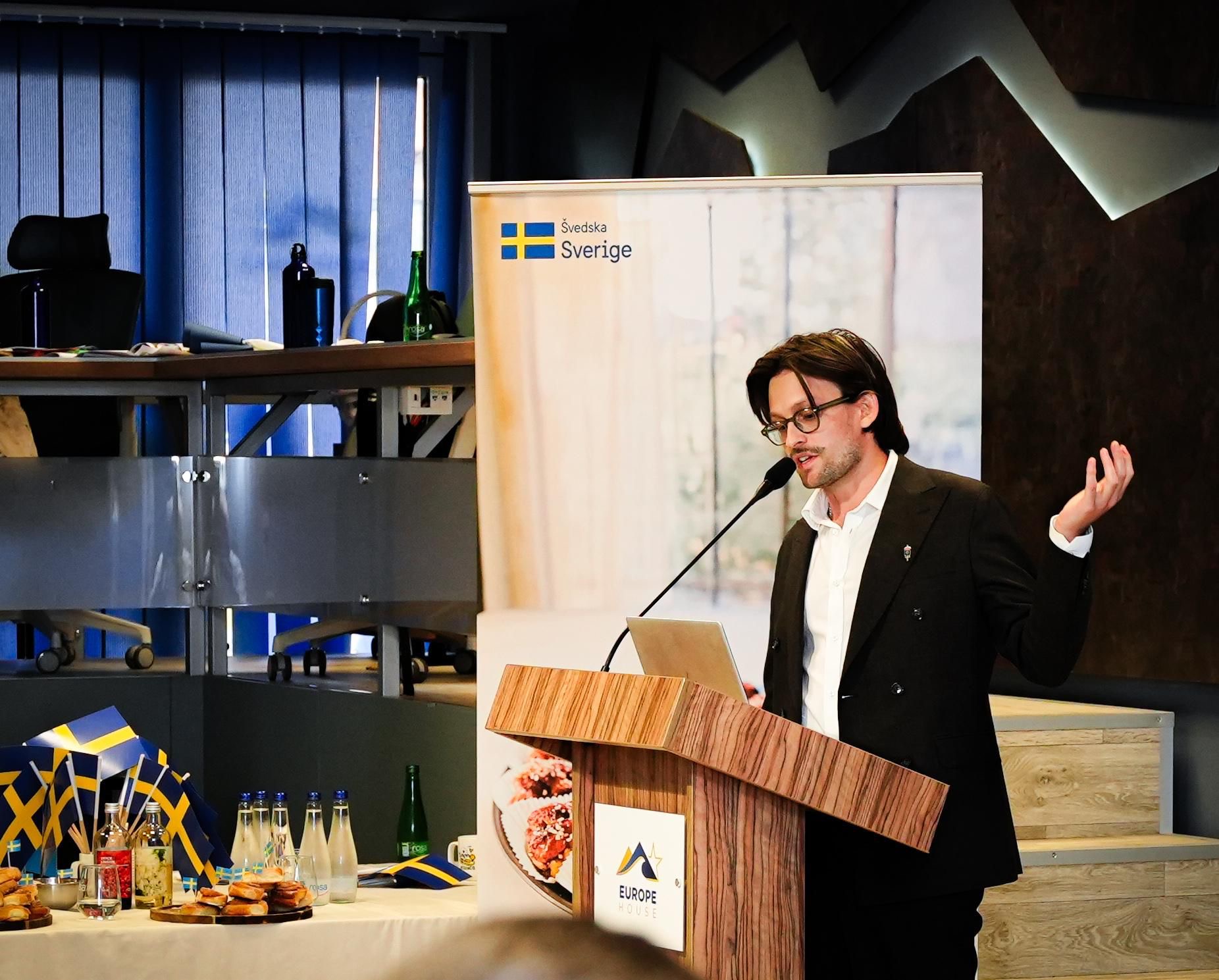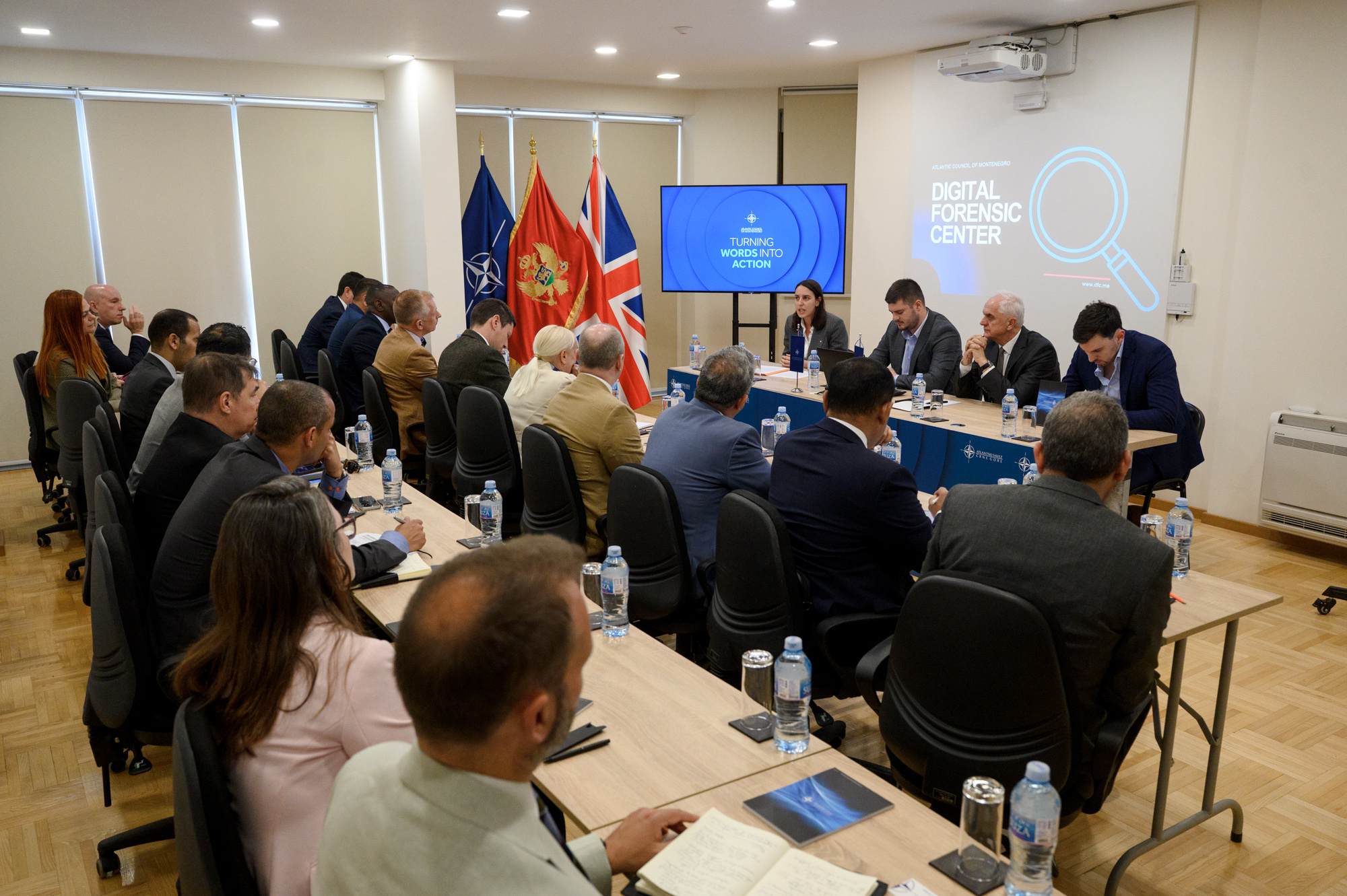




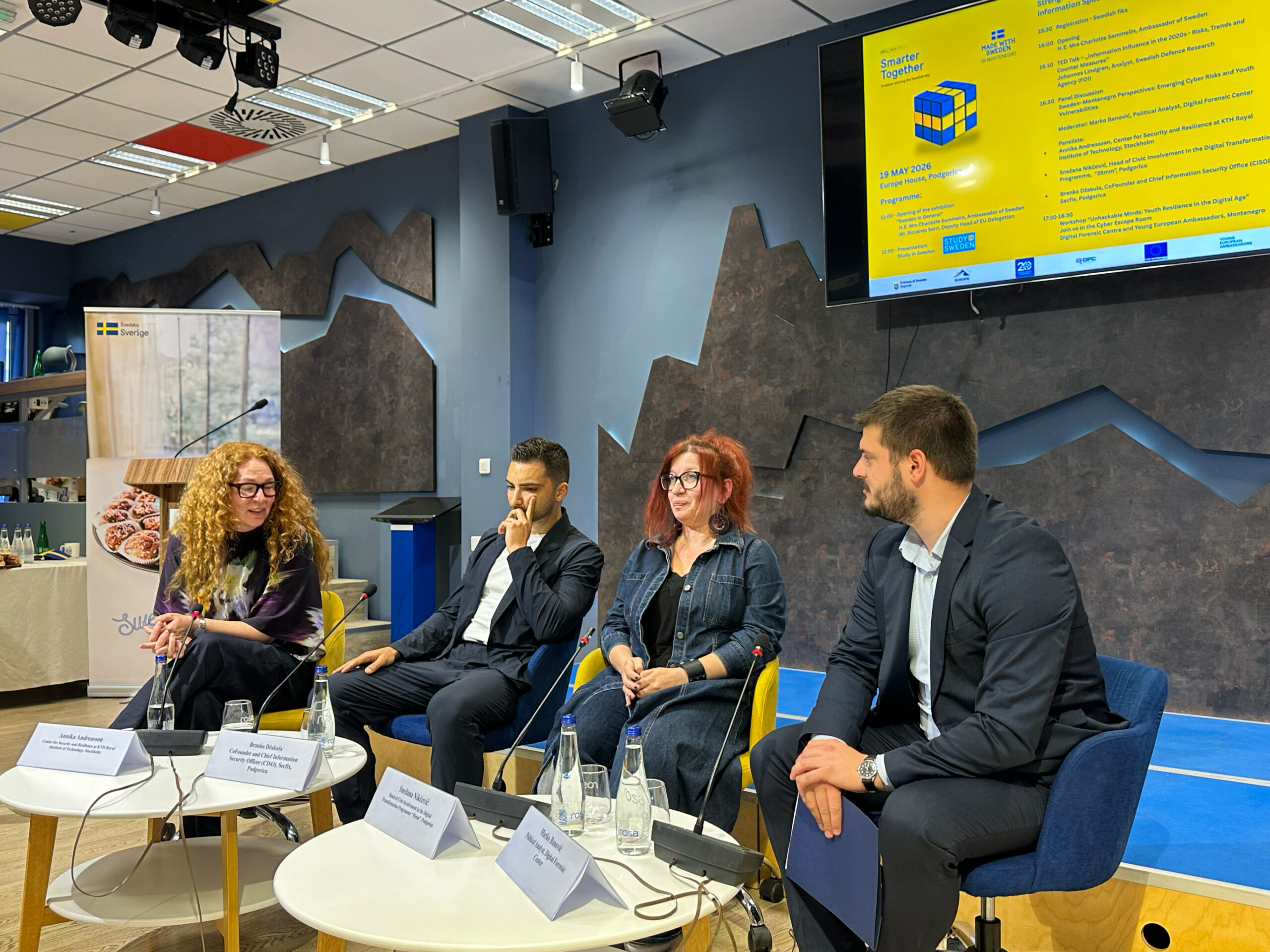
As part of a pop-up program organized by the Embassy of Sweden in cooperation with the Digital Forensic Center of the Atlantic Council of Montenegro, held on May 19, 2026, at Europe House in Podgorica, the event “Strengthening Youth Resilience in the European Information Space” was conducted, focusing on enhancing the resilience of young people in today’s digital and information environment.
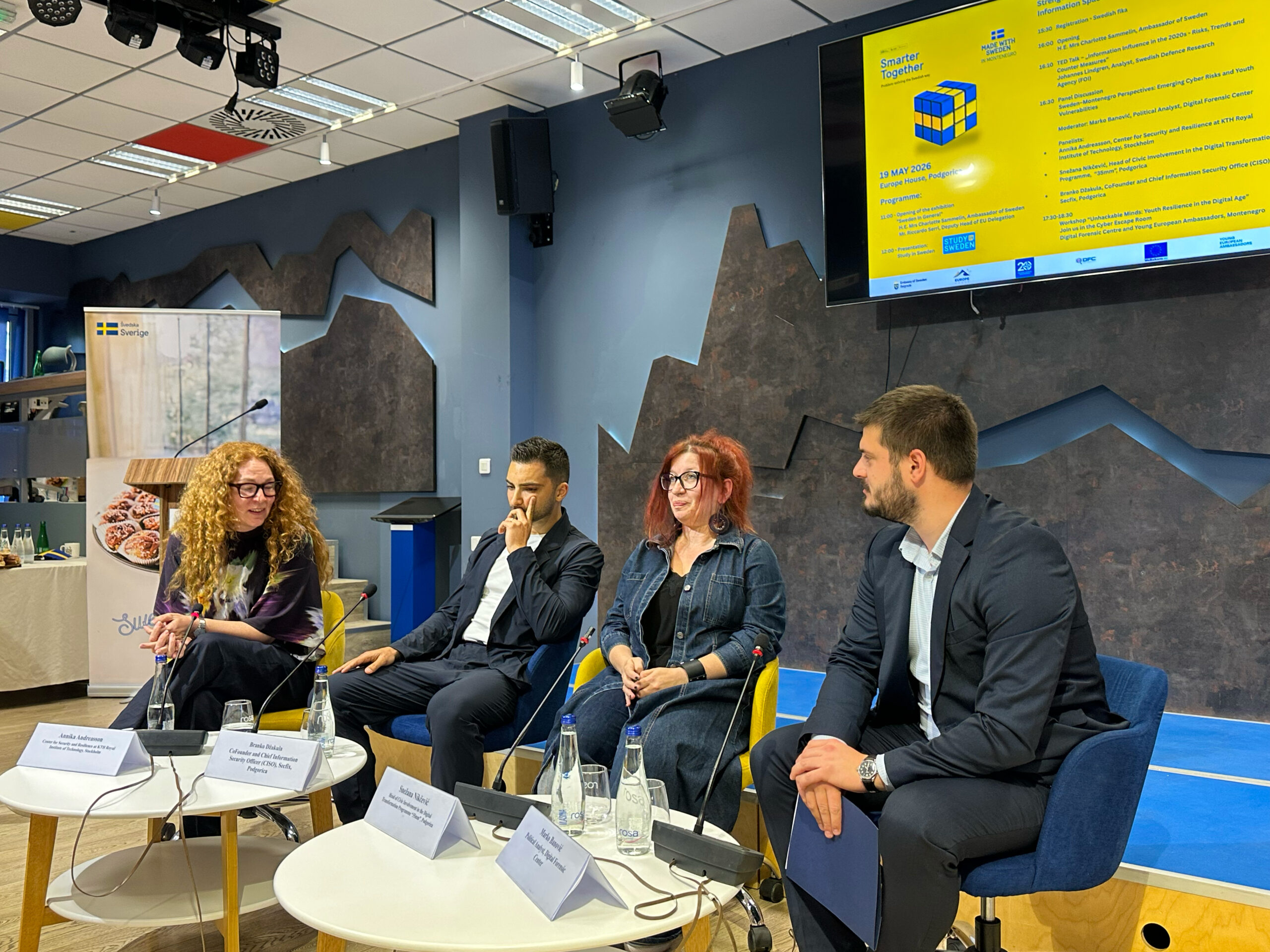
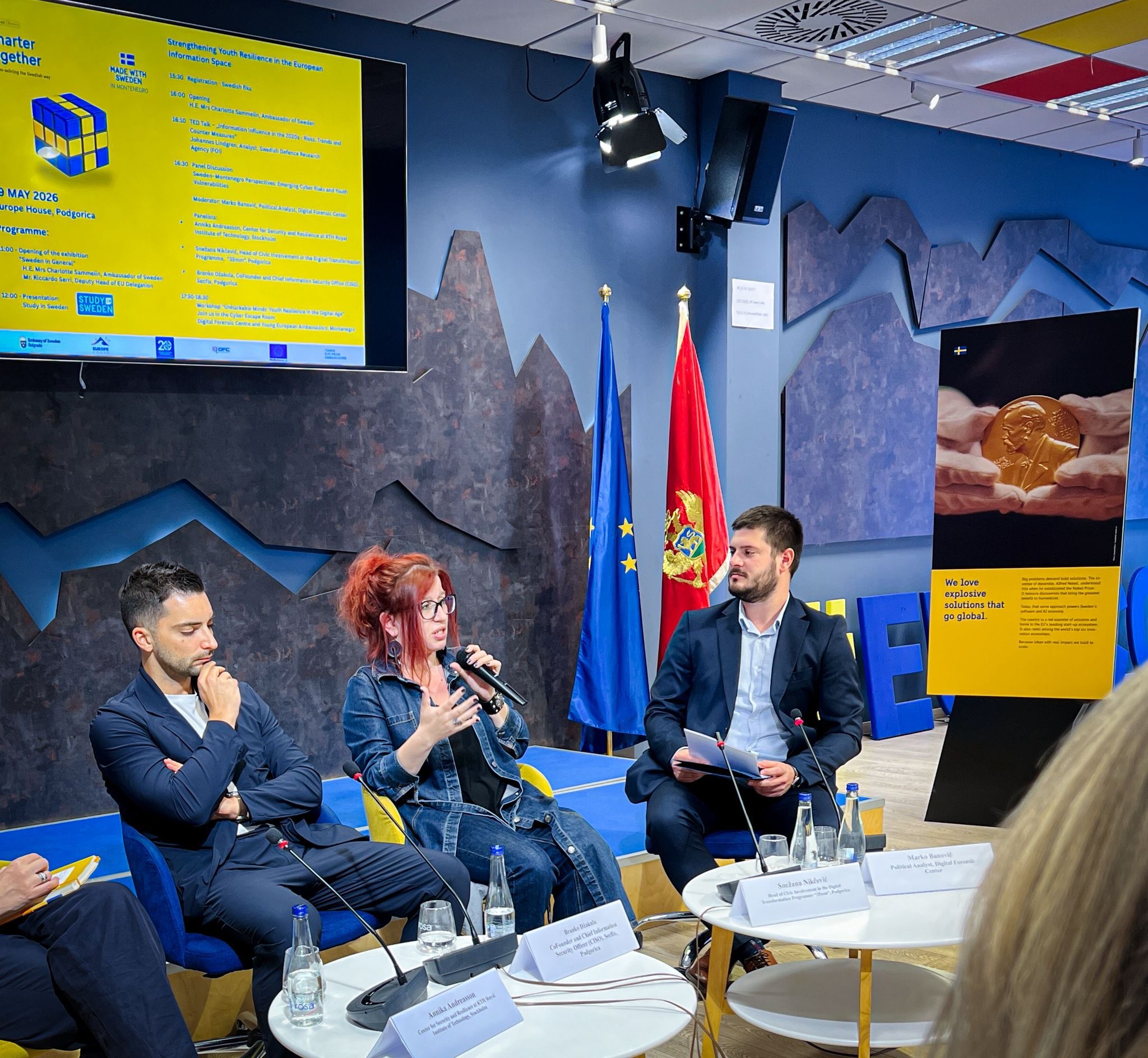
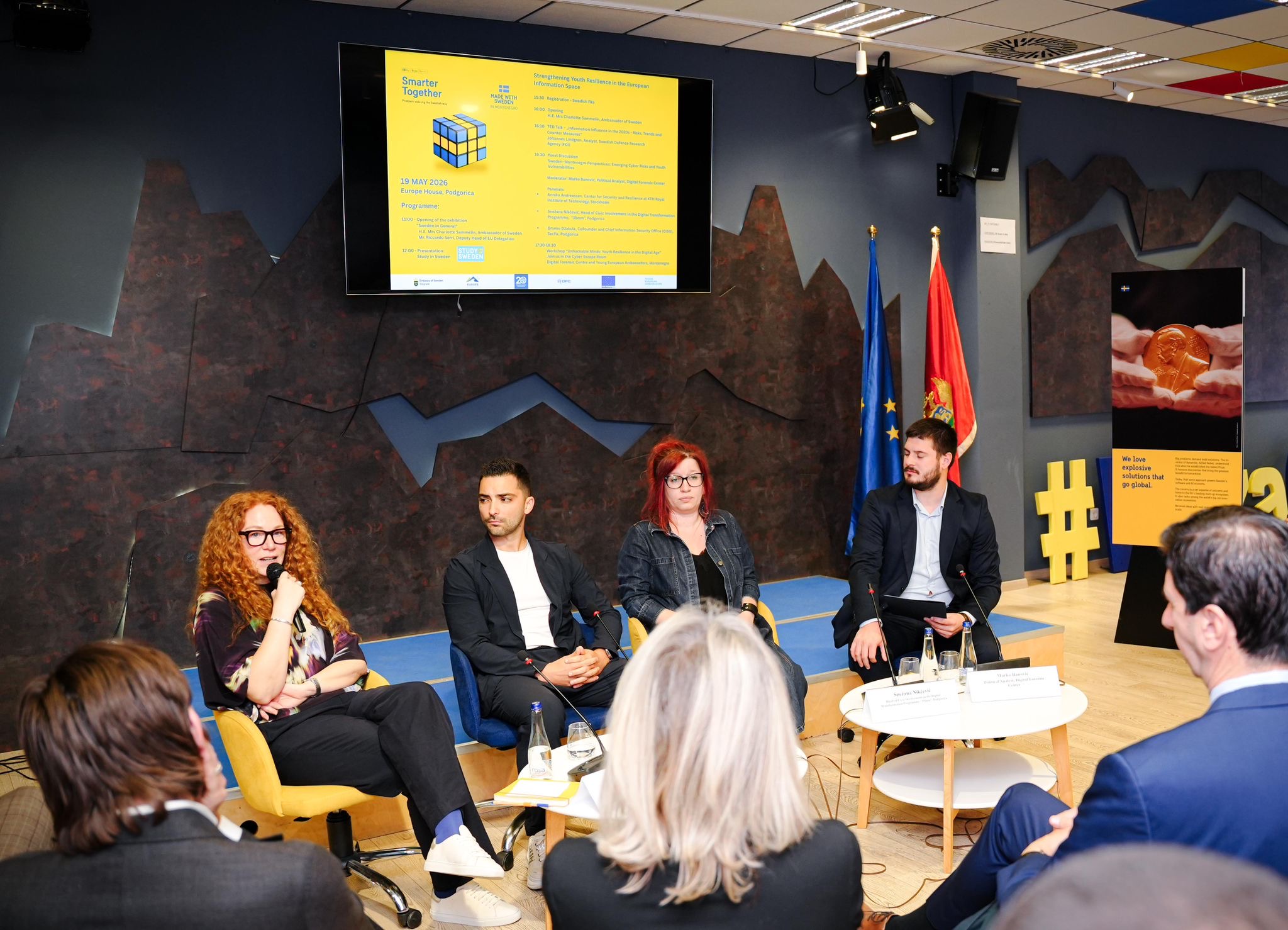
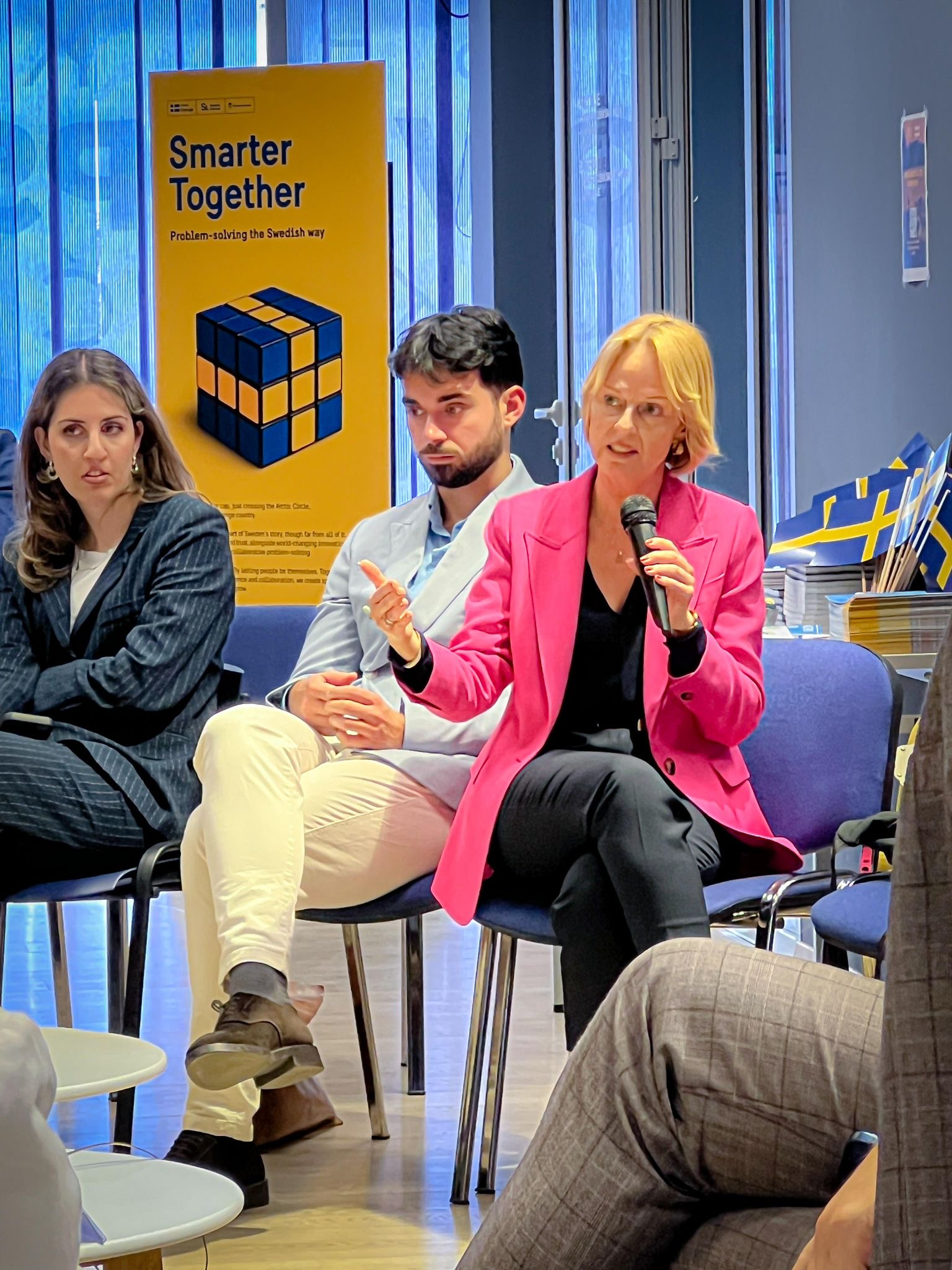
The central segment of the program was a panel discussion titled “Sweden–Montenegro Perspectives: Emerging Cyber Risks and Youth Vulnerabilities,” moderated by Marko Banović, an analyst at the Digital Forensic Center. The panel featured Annika Andreasson from the Centre for Security and Resilience at KTH Royal Institute of Technology in Stockholm, Snežana Nikčević, Head of the Civic Engagement in Digital Transformation Program at the NGO “35mm” in Podgorica, and Branko Džakula, Co-founder and Chief Information Security Officer at Secfix, Podgorica.
The discussion addressed contemporary hybrid threats, with a particular focus on the vulnerability of youth in the digital space. Panelists examined how disinformation, manipulative content, online harassment, cyberattacks, and the misuse of social media affect young people, as well as broader societal processes. Special attention was given to identifying where the most significant gaps lie in protecting youth today—whether in the lack of technical knowledge, insufficient institutional support, or limited awareness that online harm can have real-life consequences.
Participants emphasized that strengthening youth resilience requires a combination of digital and media literacy, more robust cybersecurity mechanisms, responsible online behavior, and enhanced cooperation among institutions, the education system, civil society, and the technology sector. The need for more effective regulation of social media platforms was also highlighted, particularly in terms of protecting young users from harmful content, manipulation, and the algorithmic amplification of polarizing narratives.
The panel underscored the importance of continuous education for young people on digital risks, as well as the need for institutions and the expert community to develop concrete tools and policies that will enable safer, more resilient, and more responsible participation of youth in the European information space.
Following the panel discussion, an interactive workshop on digital and media literacy was held, delivered by the Digital Forensic Center. The workshop focused on strengthening the practical skills of young people in recognizing disinformation, manipulative narratives, online risks, and unsafe behavior in the digital environment.