



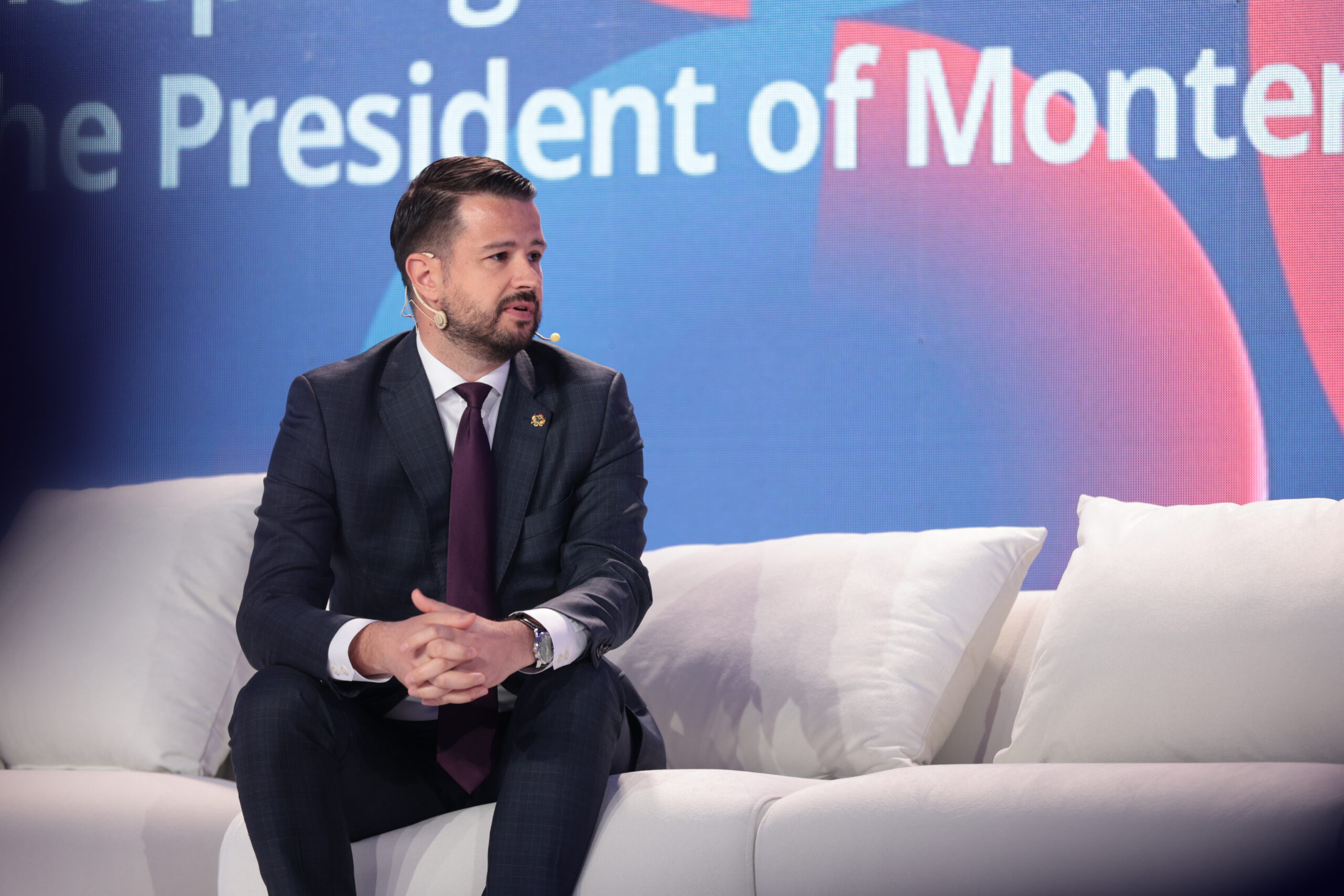
Montenegro’s decision to join NATO in 2017 was important not only for the country but also for the overall stability of the region, said the president of Montenegro, Jakov Milatović.
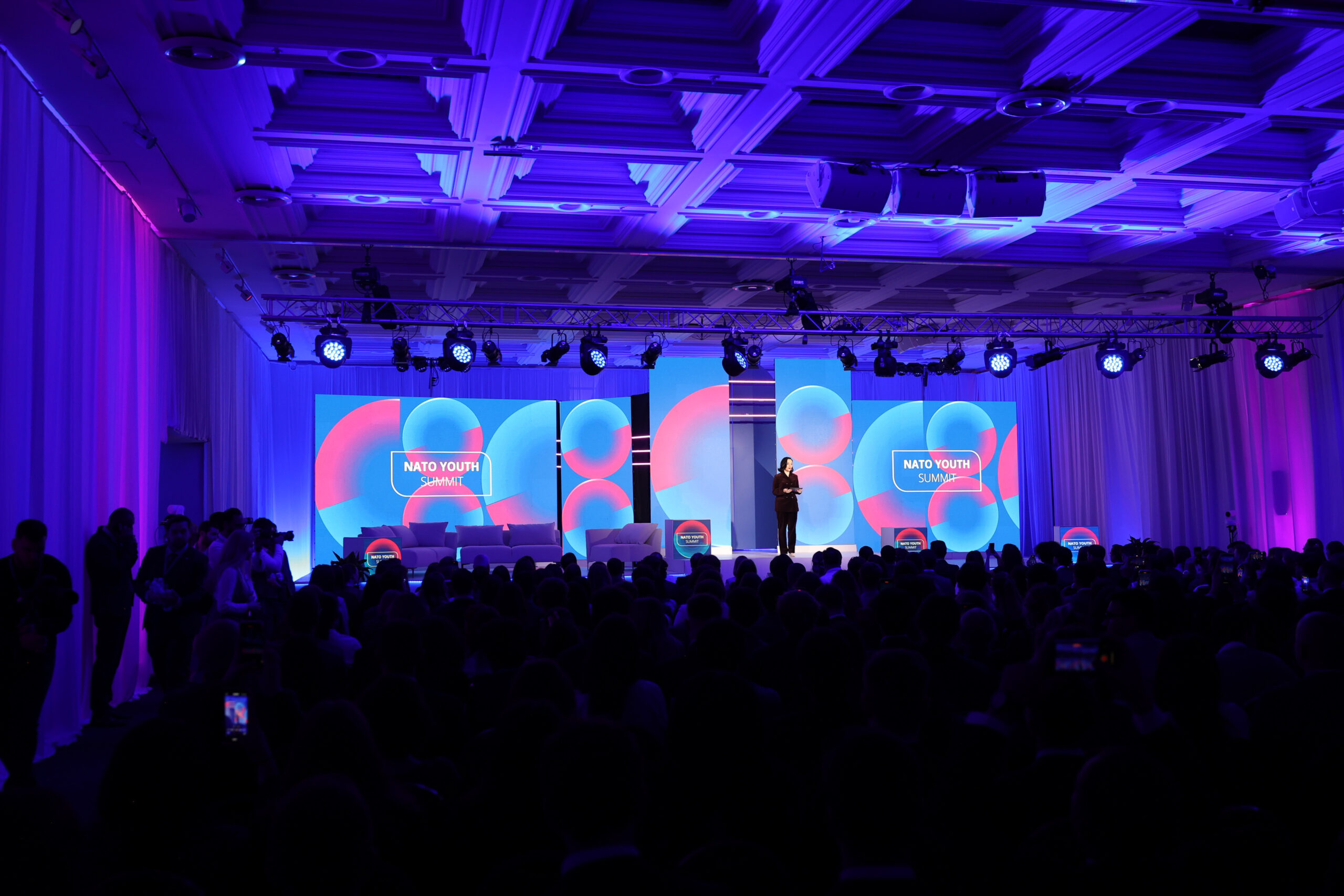
Speaking at the NATO Youth Summit, organized by the Atlantic Council of Montenegro in partnership with NATO in Budva, Milatović reminded that Montenegro is celebrating eight years of NATO membership this year and listed several benefits that have resulted from this decision.
“First, this decision is the best security guarantee for Montenegro, and our country’s membership in NATO is one of the three pillars of our defense. Second, in recent years, since we joined NATO and even before, while we were preparing for that, NATO membership has served as a great platform for the modernization of the military. Now Montenegro spends around two percent of its budget, with most of the money going toward military modernization—almost 30 percent of the budget—and this is the best way to bring our military up to NATO standards. The third benefit concerns the fact that NATO membership is usually the first step before EU membership,” Milatović said.
The President of Montenegro stated that as a full member of the Alliance, Montenegro is committed to everything it has agreed to as part of the Alliance, including defense expenditures.
“Montenegro is already among the countries that spend more than two percent on defense. We are committed to spending even more, and this will be discussed at the summit in The Hague. There are currently discussions about a new target of three percent. We are already fulfilling what has been agreed, and I believe we will be committed to everything that comes out of the summit in The Hague,” Milatović emphasized, reminding that Montenegro contributes to collective defense, especially on the eastern flank of the Alliance.
Montenegro, as he stated, belongs to the challenging part of Europe.
“By joining NATO, Montenegro has strengthened the stability of the Balkans. It is a region of six countries, three are NATO members, and three are not. Looking back to 2017, when we became a member, I believe that was an important decision for the overall stability of the region, not just for Montenegro,” said the President of Montenegro.
His opinion is that Montenegro can be a “role model” in many areas, especially, as he says, in good-neighborly relations.
“Our NATO membership is also an advantage, and the goal is to become part of the EU as well. Montenegro’s comparative advantage is its multiethnic society; this is a country where different ethnicities live, and this is a great advantage for Montenegro. The fact that all of them generally see Montenegro as their country is something I believe is important for us as leaders of the process,” Milatović emphasized.
“Montenegro is a role model and can be an even better model in the times ahead,” he added.
“There are several reasons for this, and the first is the institutional framework – we have opened all chapters, closed six, and I hope that within the next two or three years, we will close all chapters, thus completing our homework. The second reason is that we are already a NATO member, and I think this is important because we are part of the security architecture, which is a good foundation for the EU. The third reason relates to economic development – we are the most economically developed country, we use the euro, and in this sense, we are well prepared to become a member. And fourth, we are fully aligned with the EU’s foreign policy, a process supported by our NATO membership,” explained Milatović, adding that Montenegro’s EU membership by 2028 is a demanding but achievable goal.
Speaking about leadership and the future for young people, Milatović said that in many Western countries, whether in the EU or the USA, we see a kind of alienation of certain leaders from the public.
“I believe that this is precisely what has led to the changes we are noticing in terms of political shifts across the European continent, and even more so across the Western world. I believe that a good leader should never allow themselves to become completely alienated from their people. At the same time, it is important not to become a populist, but to maintain the ability to lead and emancipate, while also listening. I think this is something that is often lacking in many Western countries today, and I believe we need to place much greater focus on this,” Milatović assessed, noting that we must not forget that we all live in democracies.
“I believe that sometimes the alienation of part of the political establishment creates a huge political space for populist leaders, who can then win elections and change some of the valuable achievements we have built over the past years and decades,” added the President of Montenegro.
Speaking about the significance of the NATO Summit for young people, Milatović assessed it as a great platform, as the youth are the future of NATO countries.
“Very soon, many of you sitting in the audience now will be in my position, or the position of Deputy Secretary General, or even Secretary General. You will be making decisions about the future of our Alliance,” Milatović told the audience.
Milatović believes the main value of NATO is the idea of what NATO essentially defends.
“I believe that NATO has been more resilient than other military alliances because, in my opinion, it has defended democracy and the rule of law as the way of life we have chosen. We must not forget that democracy is not the only system that exists in the world. When we look at things from a broader perspective, we notice that the trends of democracy in the world do not always show upward trajectories. So, democracy is not a one-way street. The development of democracy requires daily effort and struggle. And it is precisely in this that I see one of the key values of the NATO alliance,” Milatović concluded, and sent a message to the youth:
“Hard work and education are the main factors of success, not political connections.”