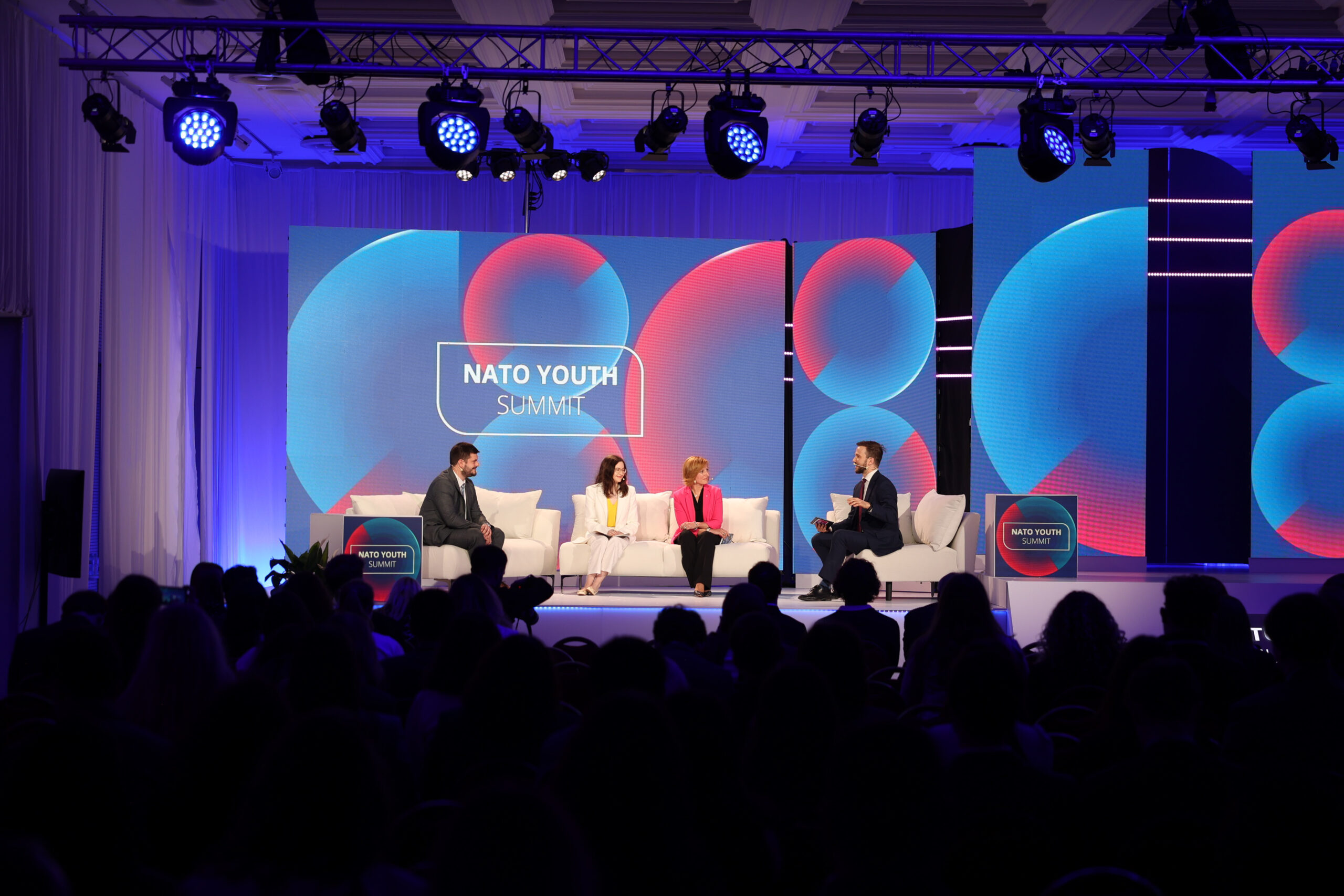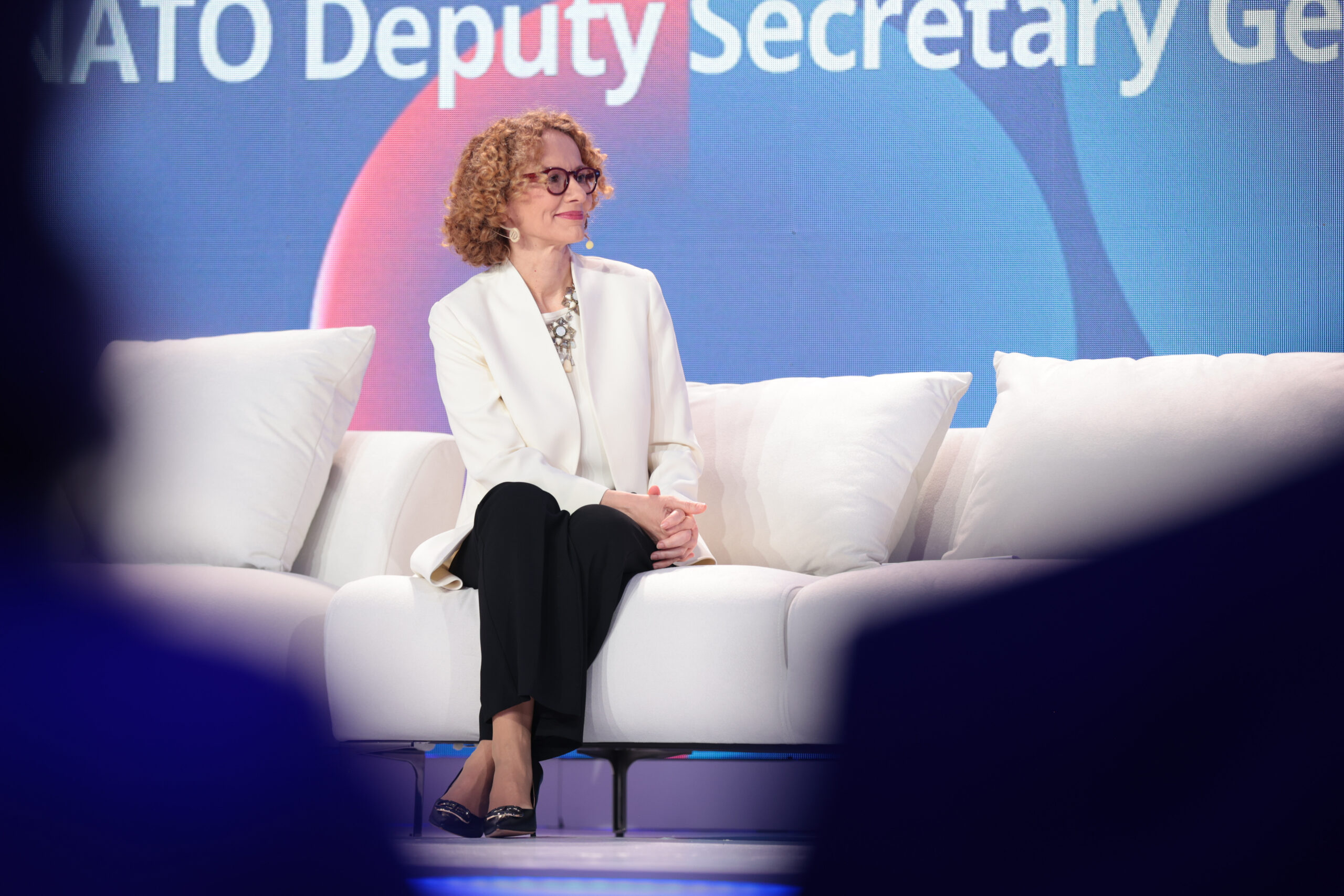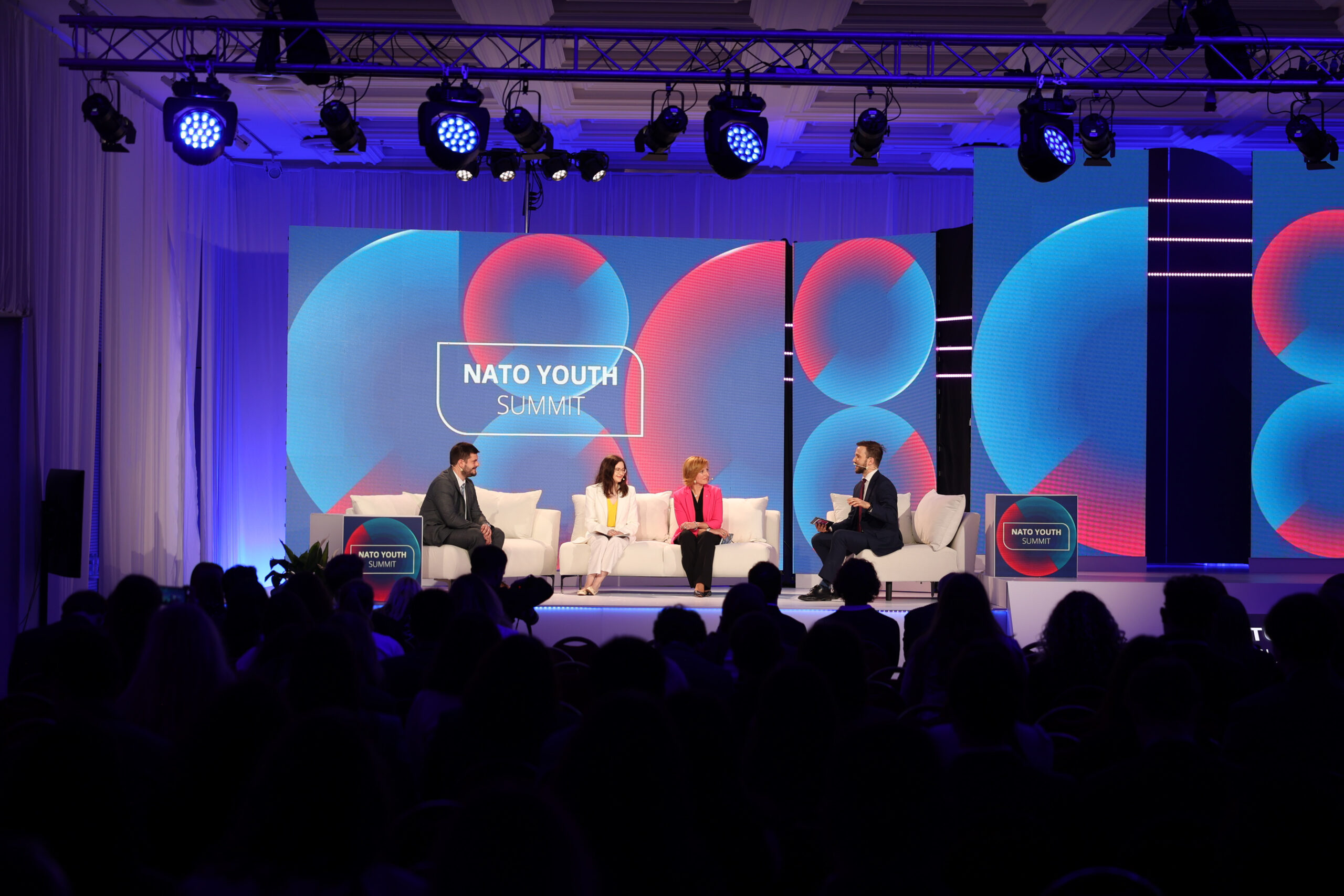





Security in the 21st century requires shared responsibility, technological resilience, and active youth engagement. This was the core message of the NATO Youth Summit, held today in Budva, organized by the Atlantic Council of Montenegro in partnership with NATO.
Participants discussed the future of collective defense, the challenges of the digital age, the rebuilding of Ukraine, the role of partnerships, and the importance of the Western Balkans region—sending a clear message: the future must be built together, responsibly, and with youth at the center of change.
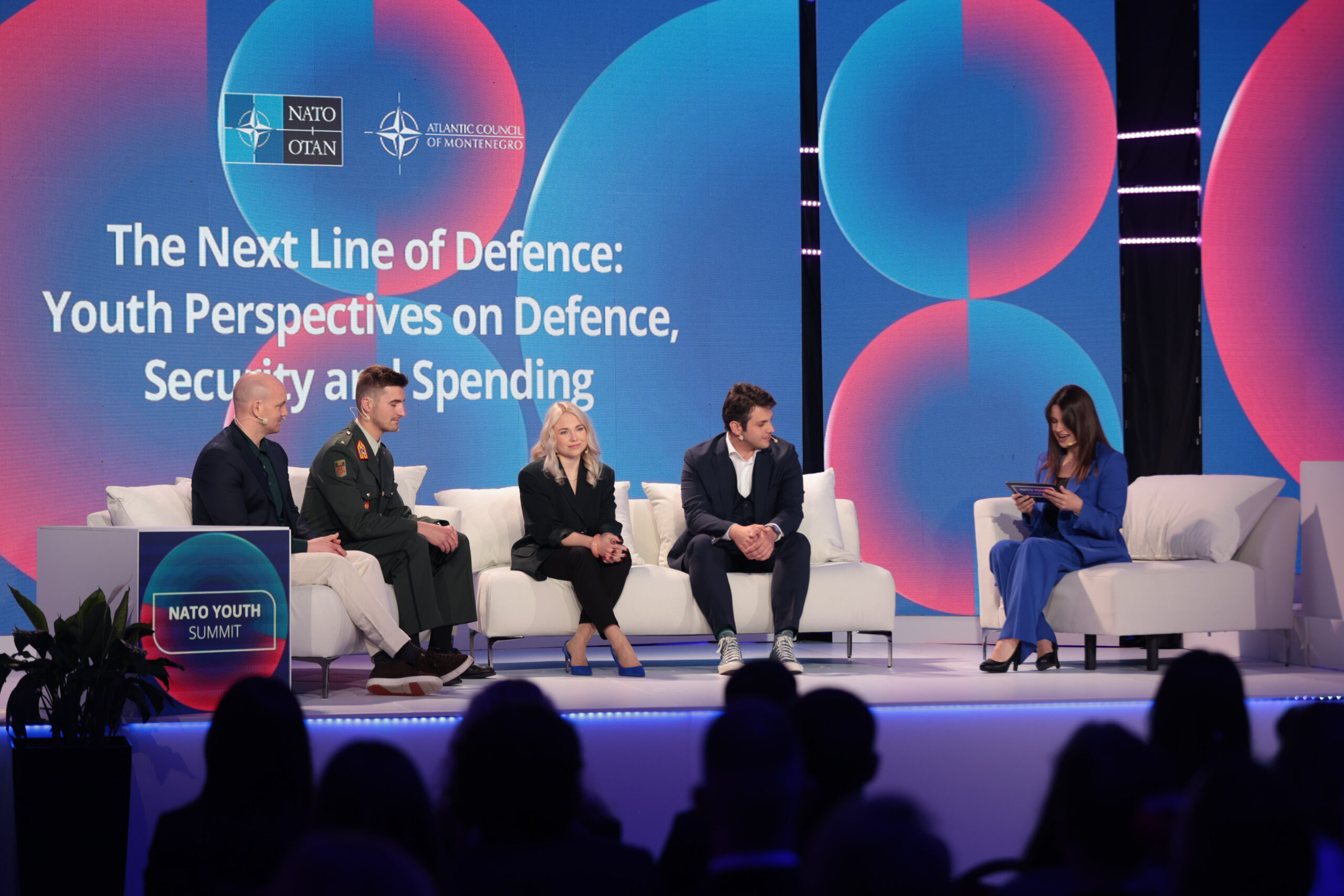
The panel “The Next Line of Defense: Youth Perspectives on Defence, Security and Spending” opened a discussion on how young people perceive the challenges of modern security.
Simon Baumann from NATO warned that money alone is not enough: “Money is a limited resource. What matters is how we use it,” Baumann said, using a vivid metaphor: “It’s like three people taking an Uber at different times—it’s smarter to go together. That’s how NATO should work.”
Baumann also highlighted the gap between the public and private sectors: “In NATO, words mean political commitment, whereas in industry, everything starts only after the contract is signed.”
Agnieszka Homanska from the Polish Ministry of Foreign Affairs pointed out the differences in threat perception: “Perception of danger depends on proximity. Poland feels the threat daily, whereas that’s not the case in Portugal or Spain,” said Homanska.
She also emphasized that previous generations failed to adequately educate young people about the importance of responsible alliance. Having grown up shortly after Poland joined NATO, Homanska admits she grew up with the belief that membership alone guaranteed security: “We were taught that America would solve everything. But an alliance isn’t one shoulder carrying all the weight—it requires shared commitment.”
Ukraine was the Focus of the “Beyond the Battlefield: Securing Peace, Rebuilding Ukraine” Panel
Krisztian Meszaros from NATO emphasized that while continued military assistance remains a priority, “long-term reforms are essential for achieving a lasting victory.”
Eoghan Gately from the European Youth Parliament highlighted that beyond political contributions, connecting young people across the continent through shared values and goals is crucial—placing special emphasis on leaders’ ability to truly hear young people.
Victoria Vdovychenko, head of the “Future of Ukraine” programme at the Centre for Geopolitics, underscored Ukraine’s vital role in European security.
“Ukraine contributes not only through low-cost drone manufacturing and joint production lines, but also through its highly motivated and professionally trained people,” said Vdovychenko. She also shared her personal experience working with governments via the newly launched First Ukrainian Analytical Programme in the UK, calling on young leaders to start building professional networks now that will be critical in the years to come.
The Western Balkans – Vital to NATO
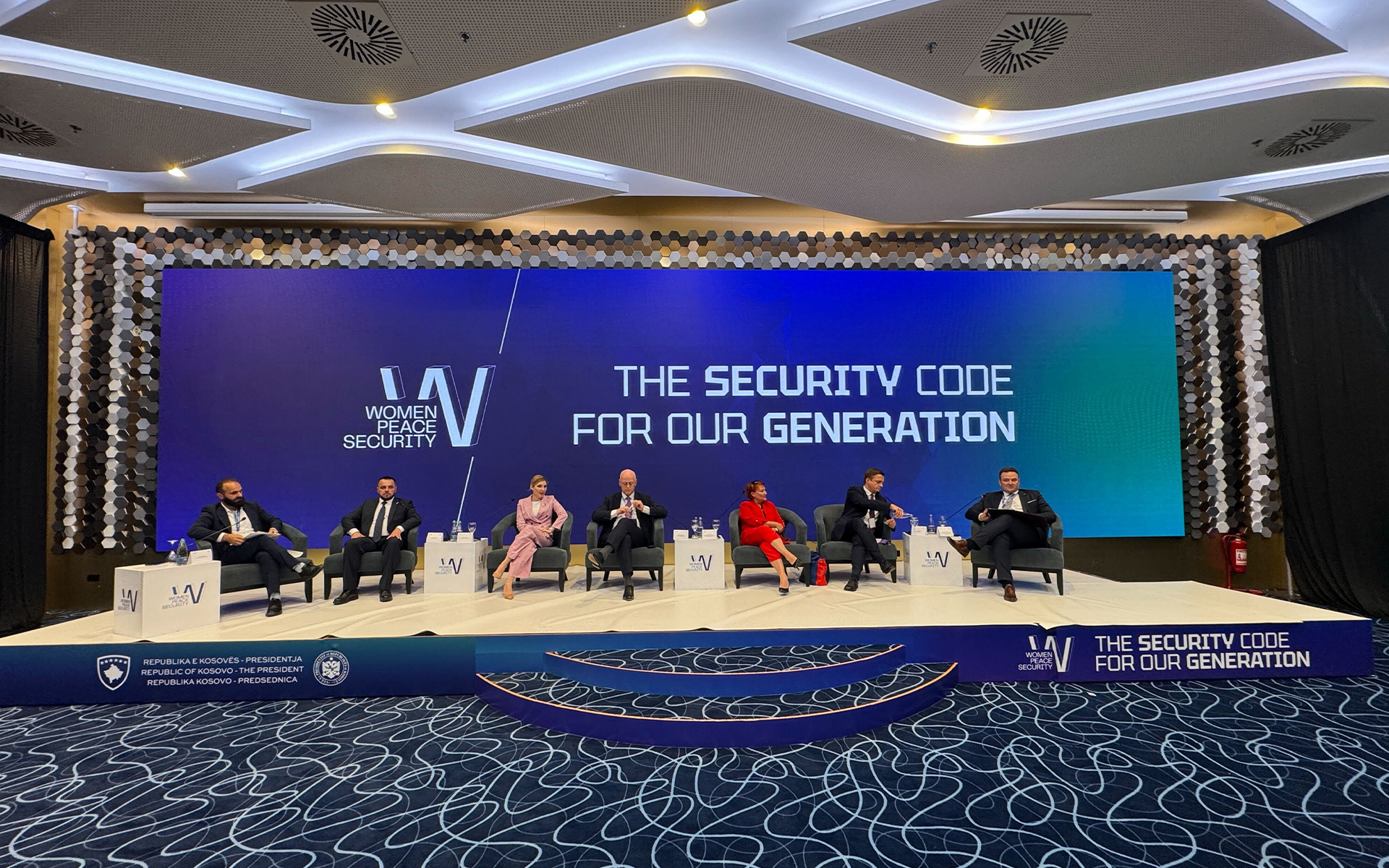
Stability, education, and cooperation are essential for the Western Balkans to move from stability to becoming a strong region. That was the central message of the panel “Securing the Region: Western Balkans from Stability to Strength,” which featured representatives from NATO, civil society, and diplomatic missions.
Lone Kjelgaard from NATO’s Advisory and Liaison Team (NALT) in Pristina noted that NATO has been present in the Western Balkans for three decades, evolving from a traditional security guarantor to a development facilitator, especially in the defense and security sectors.
“NATO’s strategic goal remains the same—regional stability, mutual cooperation, and support for democratic control over armed forces,” Kjelgaard stated. She highlighted NATO’s presence in Kosovo through KFOR and NALT, as well as its active military offices in Belgrade, Sarajevo, and Kosovo.
Nick Kalams, a Democratic Development and the Western Balkans analyst, outlined three specific steps to strengthen the region. The most important, he said, is that countries must take responsibility for their own security—regardless of NATO membership status.
“NATO is strong because its members are strong,” Kalams said, adding that military modernization and regional cooperation through joint academies and civil-military initiatives must become priorities.
NATO Partnerships and Disruptive Technologies Discussed in Two Panel Sessions
At the panel “Building Bridges, Ensuring Security: NATO’s Partnership in Action,” participants stressed the need for deeper cooperation between the EU and NATO—one that goes beyond statements and leads to actual reforms.
Henri Vanhanen, a Special Advisor in the European Parliament, pointed out that while there have been numerous declarations and joint statements on closer NATO–EU collaboration, more tangible steps are needed.
“We need to know exactly where this cooperation is heading. Yes, we’ve had exchanges, shared tables, coordinated actions, and of course, NATO and the EU already involve different actors. But NATO is more grounded in reality, while the EU is more of a political and economic union. Still, in the years ahead, this cooperation will become even more necessary—not just better communication, but real reforms,” Vanhanen emphasized.
Katja Lindskov Jakobsen, Director of the Centre for Military Studies at the Faculty of Political Science, University of Copenhagen, stated that there is a few different ways in which we can view the importance of partnerships for NATO.
“Partnerships represent the identification of shared challenges, and in our report, we especially highlighted the value of listening – that NATO listens to its partners. That’s a message we heard consistently across the various meetings we held. Partnerships, therefore, are not just relationships between NATO member states, but also with partners outside the circle of 32 members, which is especially important in the context of this panel’s topic – building bridges. These bridges refer to a joint response to identified challenges and deepening cooperation between NATO and its partners. Some examples already mentioned this morning include hybrid threats, maritime security, counterterrorism, and strengthening resilience – all areas in which partnerships are crucial,” said Jakobsen.
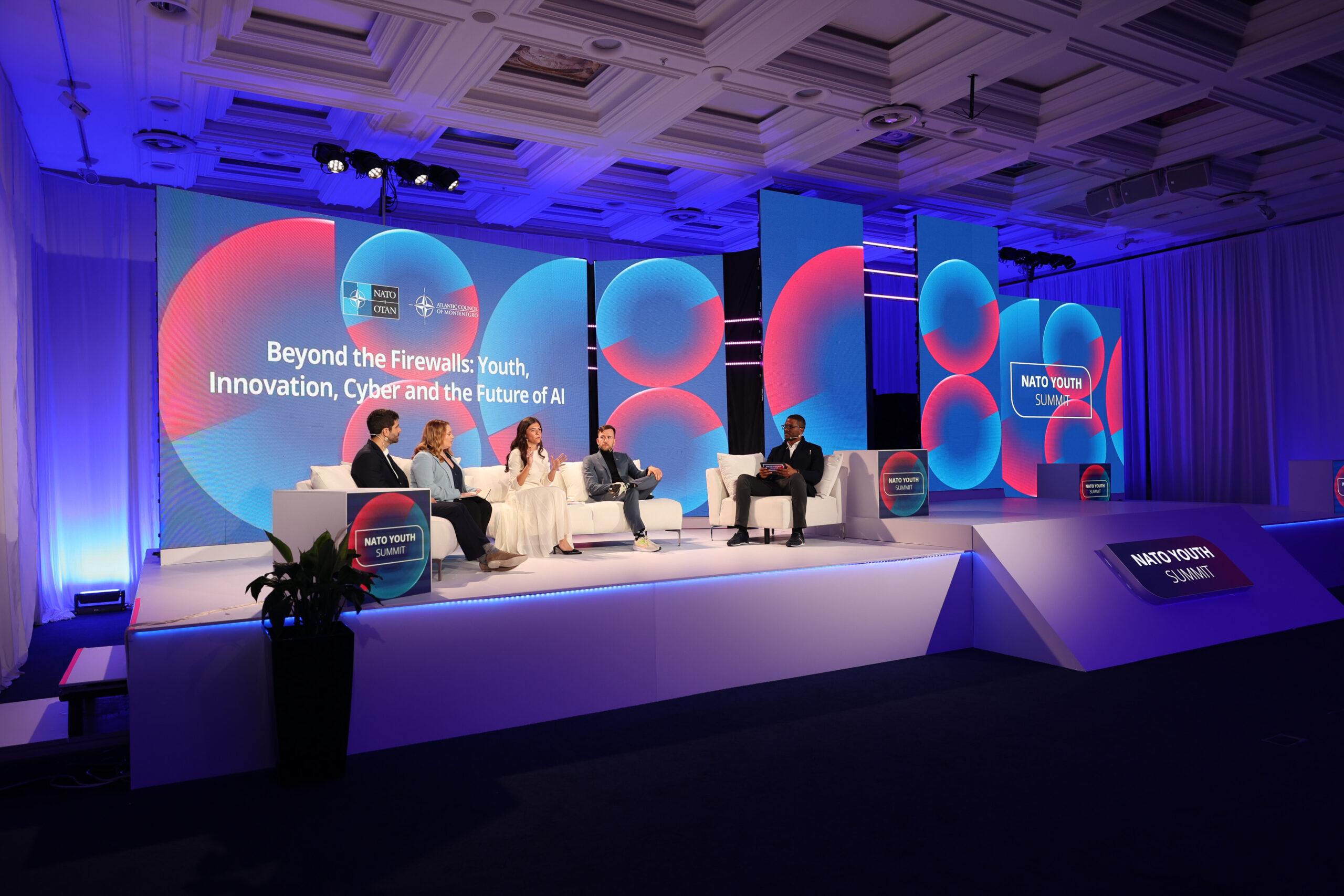
Artificial intelligence and new technologies are part of NATO’s Artificial Intelligence Strategy, whose goal is to protect against the hostile use of AI. This was discussed during the panel “Beyond the Firewalls: Youth, Innovation, Cyber and the Future of AI.”
Irene Benito, an AI Officer at NATO, stated that disruptive technologies are already present today, and artificial intelligence is one of them.
“We know that globally we are in a race for disruptive technologies. This is a race for innovation and its application, and that’s why it is an absolute priority for us — integrating these technologies into our operations in order to enhance our resilience, deterrence, and defense. We are doing that, for example, through our Artificial Intelligence Strategy. It was revised last year. Within that strategy, the priorities are crystal clear: to enhance our competitive edge in AI technology, to protect the Alliance from the hostile use of AI, and to ensure that we safeguard technological development so that our own technologies are not turned against us,” said Benito, emphasizing that it is no secret that NATO uses AI to strengthen its own AI defenses.
Hybrid Threats in the Digital Age and Guardians of the Galaxy
Speaking about hybrid threats, Vlasta Zekulić from NATO stated that the Alliance is currently working on a new strategy for hybrid warfare, which will, for the first time, be jointly written by both civilian and military teams to ensure a unified and more effective response: “We won’t separate responses but unite them – because that’s exactly how attacks come: simultaneously in both the civilian and military spheres.”
Sofia Romansky, a Strategic Analyst at HCSS and coordinator of the GC REAIM project, discussing the use of technology in the war in Ukraine, explained that technology is indeed being used, but not in the way one might expect.
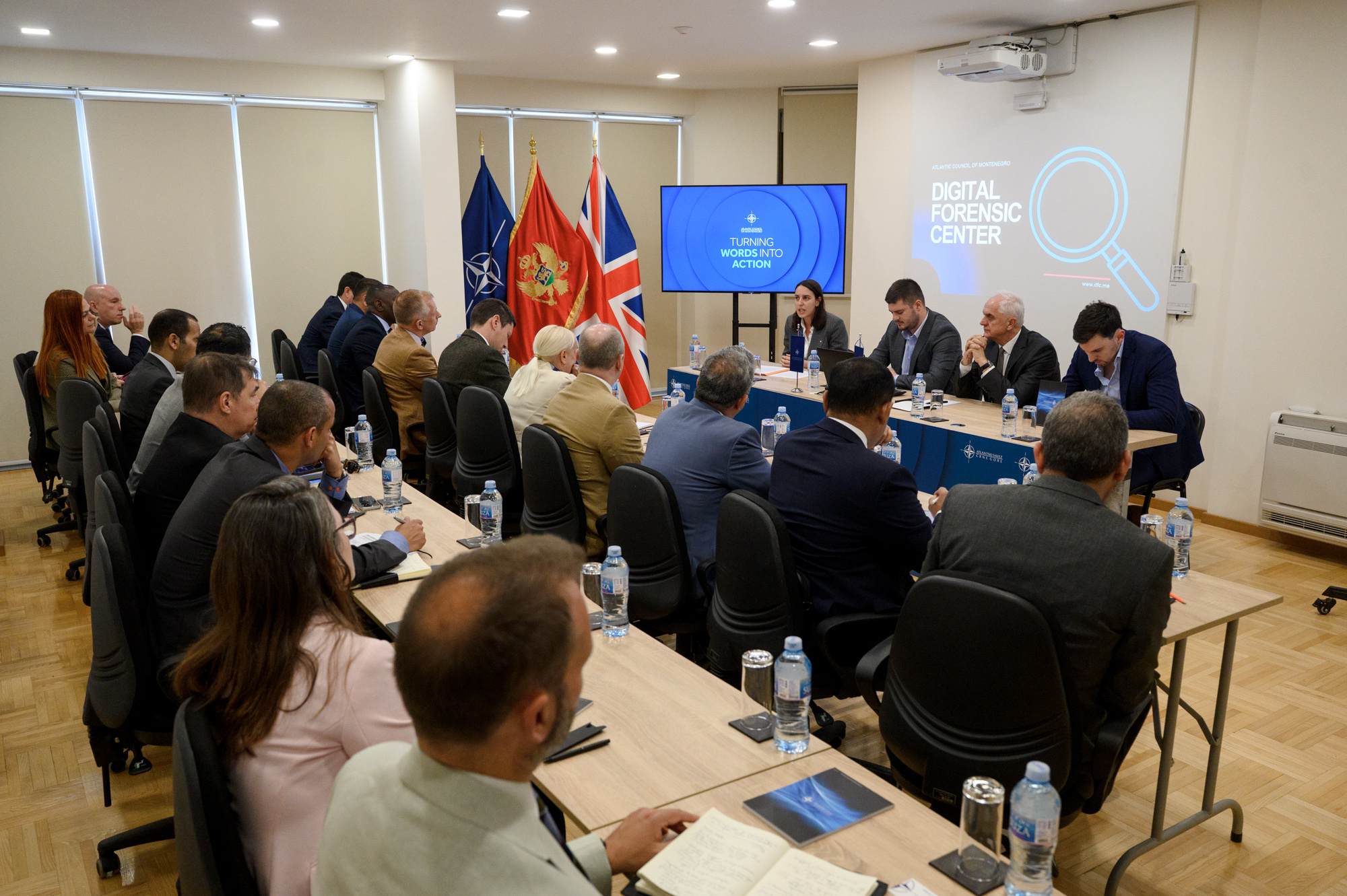
Marko Banović from the Digital Forensic Center of the Atlantic Council of Montenegro assessed that Russia and China are intensively exploiting institutional and social weaknesses in the countries of the Western Balkans to spread anti-NATO narratives and destabilize the region.
Banović warned that the region faces complex challenges that go beyond the borders of individual countries. “We have weak and politicized institutions, deeply rooted public distrust, ethnic divisions within and among countries, as well as limited cooperation among states,” he said.
According to him, all of these weaknesses are intentionally exploited by foreign actors, primarily Russia and China, to promote narratives that undermine democracy and stability. Banović highlighted that Russia employs a wide range of hybrid threats – from cyber-attacks, disinformation campaigns, and attacks on critical infrastructure, to organizing protests.
The panel “Guardians of the Galaxy: Space and the New Frontiers of Security” conveyed the message that space is not only crucial for the military.
Yannik Petry, a Space Intelligence Officer at NATO, stated that space plays a key role in NATO’s security strategy. Petry emphasized that without space capabilities, modern battlefield systems would not be able to function.
NATO Youth Summit Challenge Winners on the Leadership of the Future
Alexander Krabbendam from the Netherlands, in his address, highlighted how studying ancient history inspired him to think about leadership from a different perspective.
“The leader of the future should embody those people – nurses, soldiers on the frontlines, diplomats in meeting rooms, philosophers shaping societal ideas,” said Krabbendam. According to him, a leader of the new era does not work for fame or wealth but out of sincere dedication to the community, family, and humanity.
Eojin Park from South Korea compared the process of building leadership skills to a social game, such as Dungeons & Dragons or chess. Her metaphor suggests that, just like in games, success in leadership depends on developing specific skills and thoughtful strategies.
“I realized that leadership is not uniform. There are different types of leaders, and I presented this through three archetypes: the one with appetite (ambition), the legislator, and the theorist – the explorer,” emphasized Park. Her message clearly indicates that leadership is not reserved for one personality type but encompasses a wide range of styles and approaches that complement each other.
Ileana Ionescu from Romania, the author of a video message that went viral as part of the competition, underlined the key message: radical empathy under pressure is not a weakness – it is armor. She believes that the leaders of the future will not act alone but will empower others, creating networks of collaboration instead of hierarchies of control.
The Strength of Youth for the Strength of the Alliance
By the end of the event, NATO officials agreed that young people are not passive observers but drivers of change.
“We cannot allow others to tell our story. That’s our job,” said Krisztian Meszaros from NATO, urging young people to take responsibility for their own security.
Lone Kjelgaard, Chief of Staff of the NATO Advisory and Liaison Team (NALT) in Pristina, emphasized that this event was particularly inspiring and educational for her, to the point that, as she said, it was the first time in her life that she took notes on her phone.
Kjelgaard stressed the importance of returning to NATO’s core mission — the protection of the Euro-Atlantic area. However, as she added, it’s not enough just to know what needs to be communicated; it requires people, a political framework, and platforms to convey the message in the right way.
Fifth NATO Youth Summit was organized 25. 25. in Budva, and the conference was held for the first time in Montenegro.